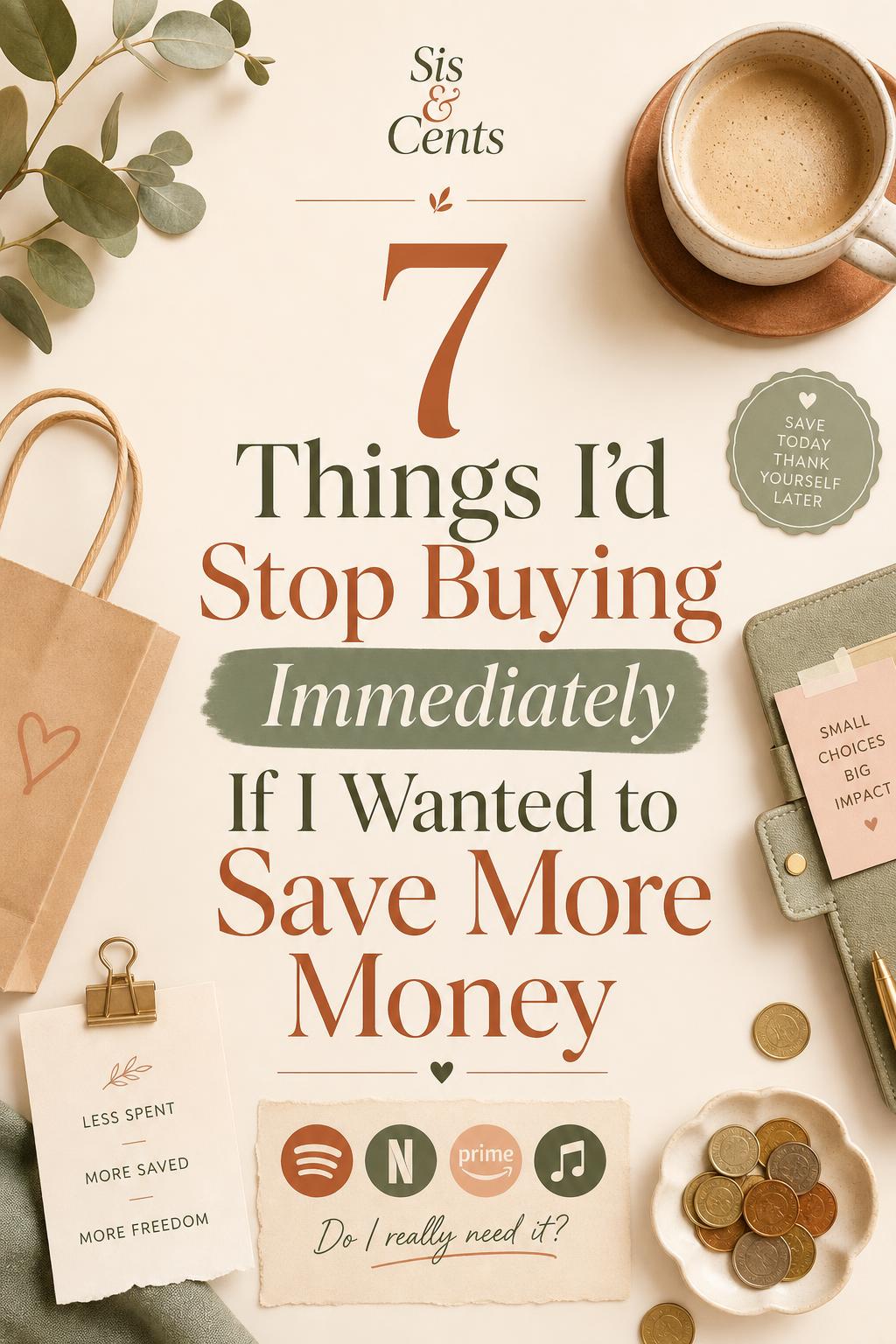
7 Things I'd Stop Buying Immediately If I Wanted to Save More Money
If I needed to free up cash fast, these are the first seven things I'd cut. No shame, no extreme frugality — just smart switches that actually stick.
August 14, 2026 · 8 min read · by your money big sis
pin it for later ↑
Let's be honest: "save more money" sounds great until you realize it usually means giving up stuff you actually like. That's why most budgeting advice doesn't stick. Nobody wants to live on rice and beans forever.
But if I needed to free up cash quickly — like, actually quickly — there are a few purchases I'd pause or cut without making my life miserable. These aren't essentials. They're the sneaky budget drains that feel small in the moment but could potentially add up to hundreds (sometimes thousands) every year.
Cutting them isn't about deprivation. It's about redirecting your money toward things that actually matter to you.
1. Daily coffee shop drinks
I know, I know. The latte factor has been beaten to death. But hear me out: this isn't about never enjoying a coffee. It's about the daily habit.
A $6 latte five days a week is roughly $1,560 a year. If you grab a pastry too, you're easily over $2,000. That's a fully funded emergency starter fund or a big chunk of debt payoff.
The switch: Make coffee at home most days and let the coffee shop be a treat once or twice a week. You still get the ritual. You just don't pay a premium for it every single morning.
2. Subscription services I barely use
Streaming services, fitness apps, meal-planning tools, premium versions of free apps — they all sound cheap until you list them out. Ten subscriptions at $10–$20 each is $100–$200 a month.
Most people are paying for at least two or three they forgot about. I once found a podcast app in my subscriptions on my phone that I hadn't opened in months.
The switch: Audit every subscription. Cancel anything you haven't used in the last 30 days. For the ones you keep, see if a cheaper plan works or split a family plan with someone you trust.
3. Impulse Amazon and Target purchases
"I'll just browse" is the most expensive sentence in the English language. One minute you're buying toothpaste, the next you're checking out with a $47 cart of random stuff you didn't know existed ten minutes ago.
Online shopping is designed to make spending frictionless. That's exactly why it drains budgets so fast.
The switch: Use a 48-hour waiting rule. If you still want it two days later, fine. Most wants disappear by then. Also: never shop when you're bored, tired, or stressed. That's when the algorithm wins.
4. Fast fashion and trend shopping
Buying a $25 top because it's cute and cheap feels harmless. But those cheap pieces wear out fast, go out of style faster, and usually get replaced with another $25 top. Repeat twelve times a year and you've spent $300 on clothes you don't love.
The switch: Buy fewer, better pieces that mix and match. Stick to a color palette. Wait 30 days before buying anything clothing-related that isn't replacing something worn out. Thrift stores and resale apps are also goldmines for quality pieces at a fraction of the price.
5. Food delivery when I'm just being lazy
Delivery fees, service fees, tips, and marked-up menu prices can turn a $12 meal into $28. Do that twice a week and you could be spending over $1,600 a year just to avoid cooking.
I'm not saying never order in. I'm saying be honest about whether you're actually too busy to make a sandwich or just don't feel like it.
The switch: Keep a few lazy-but-cheap meals on hand: eggs and toast, frozen dumplings, pasta with jarred sauce, a quesadilla. If you still want delivery after eating something simple, go for it. But most of the time, the craving was just hunger.
6. Name-brand groceries when generic is identical
This one is low-hanging fruit. Store-brand oats, rice, beans, flour, sugar, milk, and canned goods are often made in the same facilities as the name brands. You're paying for the label, not a better product.
The switch: Try the store brand for one shopping trip. If you can't tell the difference, keep buying it. The savings are instant and they compound every single week.
7. Beauty and skincare products I buy on hype
The beauty industry is very good at making you feel like you need one more serum, one more gadget, one more product. But skin doesn't need twelve steps. What actually could be beneficial is consistency, sunscreen, and not being irritated by a new active ingredient every month.
The switch: Use what you have until it's empty. Then replace only what you actually need. Find a simple routine and stick with it. Your bathroom counter and your wallet will thank you.
What to do with the money you free up
Here's the part most people skip: don't just save it and let it sit in checking. Give it a job.
- Build a $1,000 starter emergency fund
- Pay off high-interest debt
- Start a sinking fund for something you actually want
- Increase your 401(k) contribution by 1%
Even $200 a month redirected toward a real goal changes your financial picture faster than you think.
The honest truth
You don't have to stop buying all seven of these things. Maybe coffee shop runs are genuinely your joy and you'd rather cut something else. That's fine. The point is to choose on purpose instead of spending on autopilot.
Pick two or three from this list that feel easy. Try them for 30 days. Track what you save. I bet you'll be surprised.
I'm rooting for you!
Disclosure: This article is for educational, informational, and entertainment purposes only. It is not financial advice. I am not a financial professional, and you should always independently verify important information and consult a qualified financial professional when necessary. Any dollar amounts presented in this article are estimates. Be sure to do your own financial research.
Keep reading, sis
 Budgeting
The Beginner's Guide to Budgeting (Without Losing Your Mind)
Okay sis, sit down — we're going to build the first budget that actually works for you. No spreadsheets, no shame spirals. Just a real plan.
June 14, 2026 · 8 min read
 Budgeting
The 30-Day No-Spend Challenge
The rules, the loopholes, the honest breakdown of how a 30-day no-spend challenge works— and a printable checklist to do your own no-spend month.
June 22, 2026 · 7 min read
 Budgeting
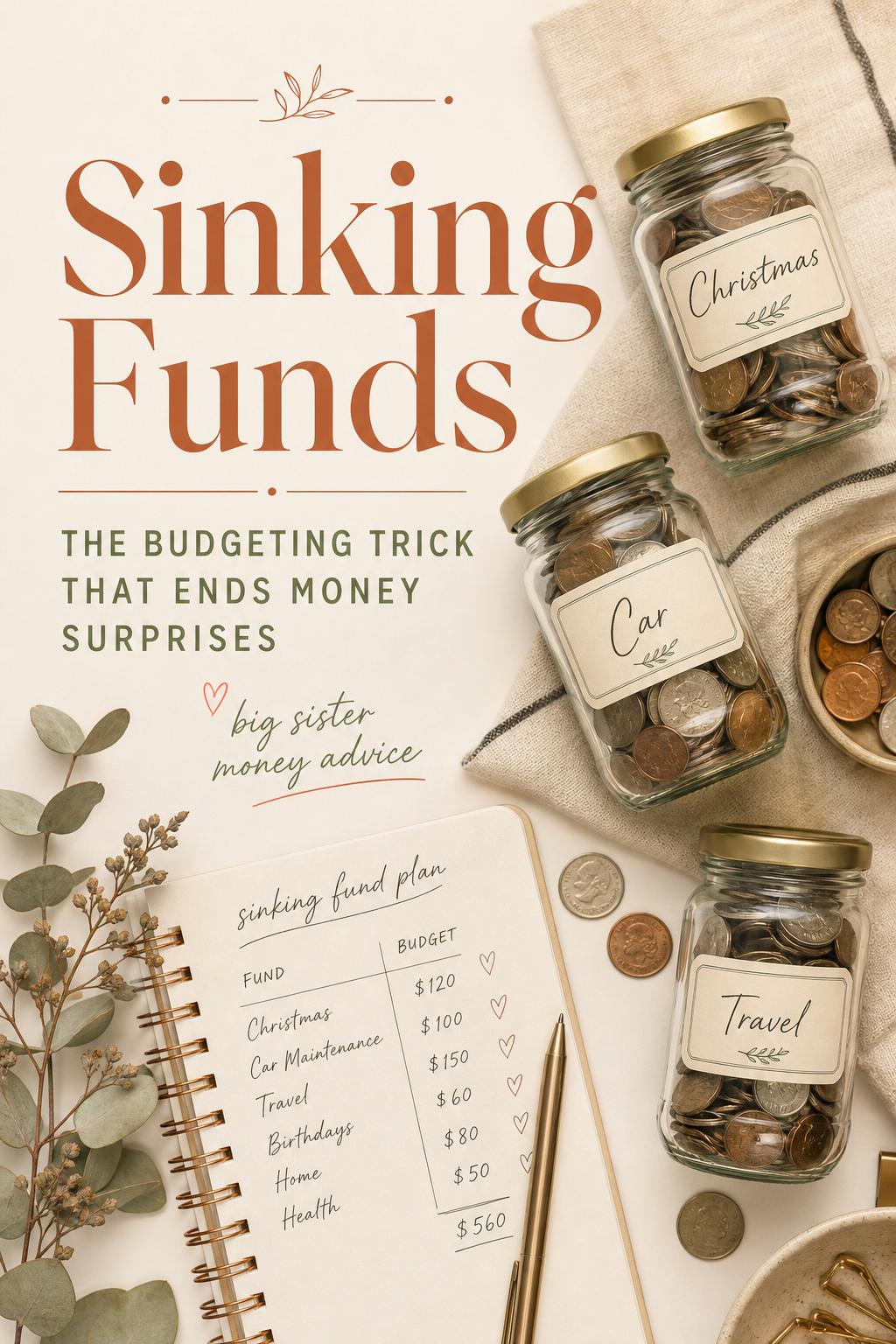
Sinking Funds: The Budgeting Trick That Ends Money Surprises
Christmas isn't an emergency. Neither is your car registration. Here's how to use sinking funds to make big expenses feel like nothing.
June 21, 2026 · 6 min read
 Budgeting
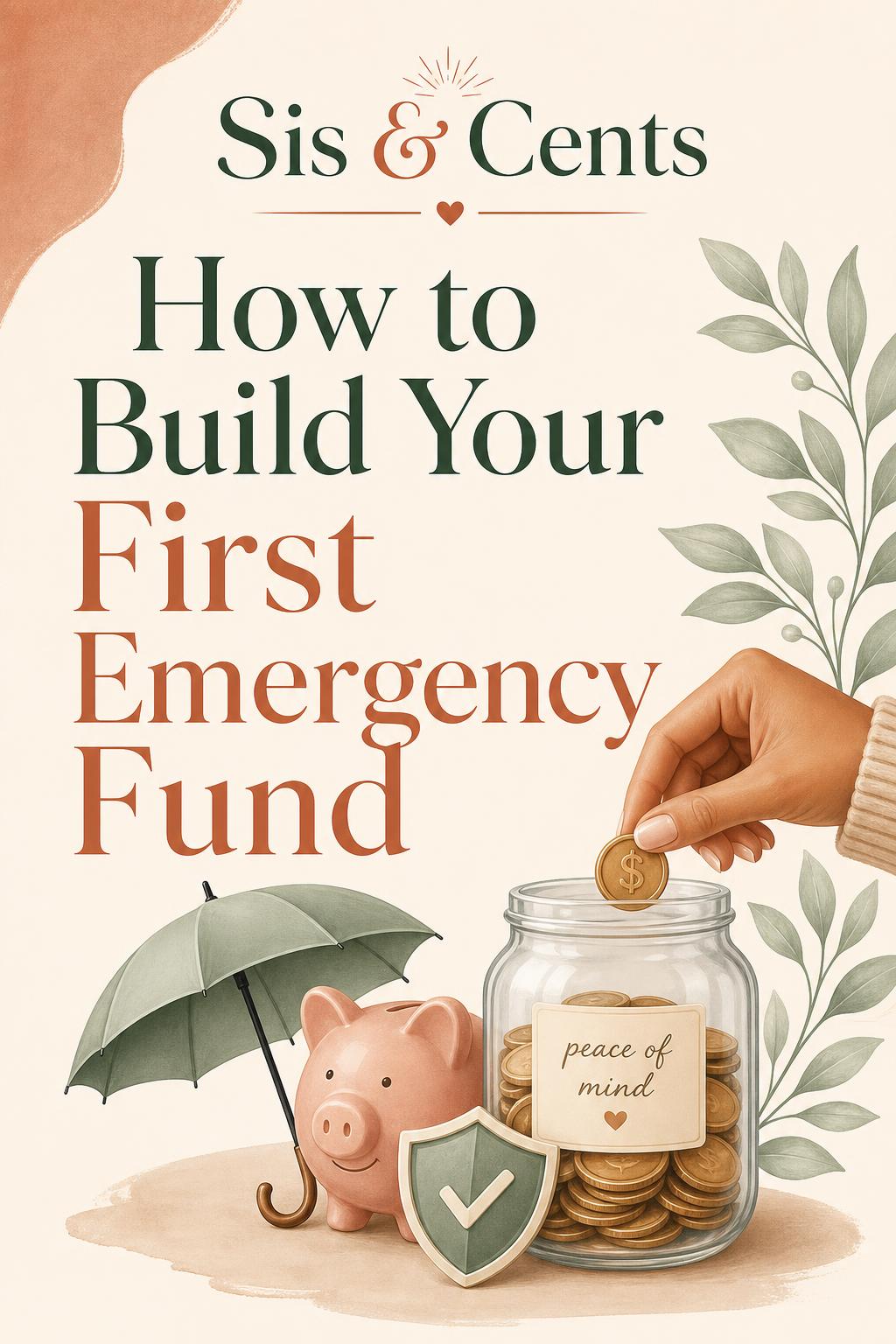
How to Build Your First Emergency Fund (Even If You're Broke)
An emergency fund is the buffer between you and life going sideways. Here's how to start one from zero — without giving up everything you love.
August 12, 2026 · 8 min read
Filed under