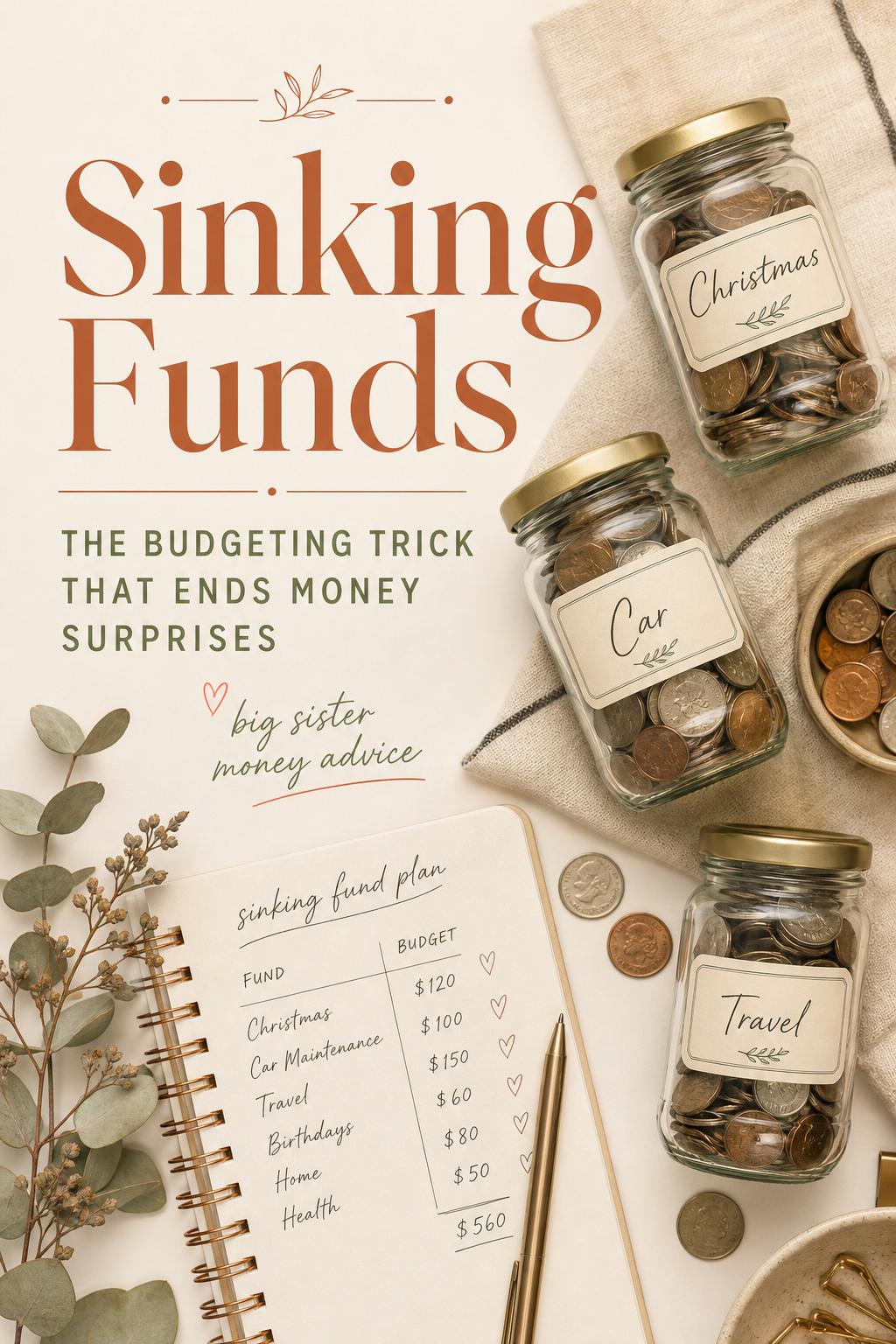
Sinking Funds: The Budgeting Trick That Ends Money Surprises
Christmas isn't an emergency. Neither is your car registration. Here's how to use sinking funds to make big expenses feel like nothing.
June 21, 2026 · 6 min read · by your money big sis
pin it for later ↑
If your budget keeps getting derailed by "surprise" expenses that... aren't actually surprises, you need sinking funds. Here's the whole system.
What a sinking fund is
A sinking fund is a small savings pot for a specific future expense. You know it's coming, so you save for it a little at a time.
Sinking funds have a lot of proven worth: the concept of a sinking fund dates all the way back to 18th Century Great Britain as it was implemented to help solve national debt. It was also used by the United States' First Congress. If sinking funds were used then, and are still around today, then they might be useful in our personal lives too!
Here's an example: Christmas costs you $600. Instead of panicking in December, you save $50/month starting in January. December comes. You have $600. No credit card, no stress.
The 8 sinking funds everyone needs
- Christmas / holidays — $30–$100/mo
- Car maintenance — $50/mo minimum
- Car registration & insurance — divide annual by 12
- Medical / dental — $25–$50/mo
- Home repairs (or renter's insurance) — $50/mo
- Travel — whatever you can
- Gifts (birthdays, weddings, baby showers) — $25/mo
- Vibes fund — for concerts, that jacket, spontaneous joy
How to set them up
Open a high-yield savings account (Ally, Marcus, or Discover — all around 4% APY). Most banks let you create multiple "buckets" inside one account (this is KEY for organization, definitely try to find an account that allows you to create buckets). Name each bucket. Set auto-transfers on payday.
That's it. Set it and forget it.
OR if you don't want your money auto-transferring out of your paycheck when it hits your account, you can manually transfer each monthly amount into each bucket in your high-yield savings account. To semi-automate this process, set calendar reminders on each payday to set aside 15 minutes to do the transfers. Boom, done!
Sinking funds turn every expected expense into a solved problem.
The math that changes everything
If you save $315/month across all 8 funds, you'd have $3,780 a year covering things that used to blindside you. That's the difference between "how am I going to afford Christmas" and "already handled."
Try it for 90 days. You'll never go back.
Keep reading, sis
 Budgeting
The Beginner's Guide to Budgeting (Without Losing Your Mind)
Okay sis, sit down — we're going to build the first budget that actually works for you. No spreadsheets, no shame spirals. Just a real plan.
June 14, 2026 · 8 min read
 Budgeting
The 30-Day No-Spend Challenge
The rules, the loopholes, the honest breakdown of how a 30-day no-spend challenge works— and a printable checklist to do your own no-spend month.
June 22, 2026 · 7 min read
 Budgeting
How to Build Your First Emergency Fund (Even If You're Broke)
An emergency fund is the buffer between you and life going sideways. Here's how to start one from zero — without giving up everything you love.
August 12, 2026 · 8 min read
 Budgeting
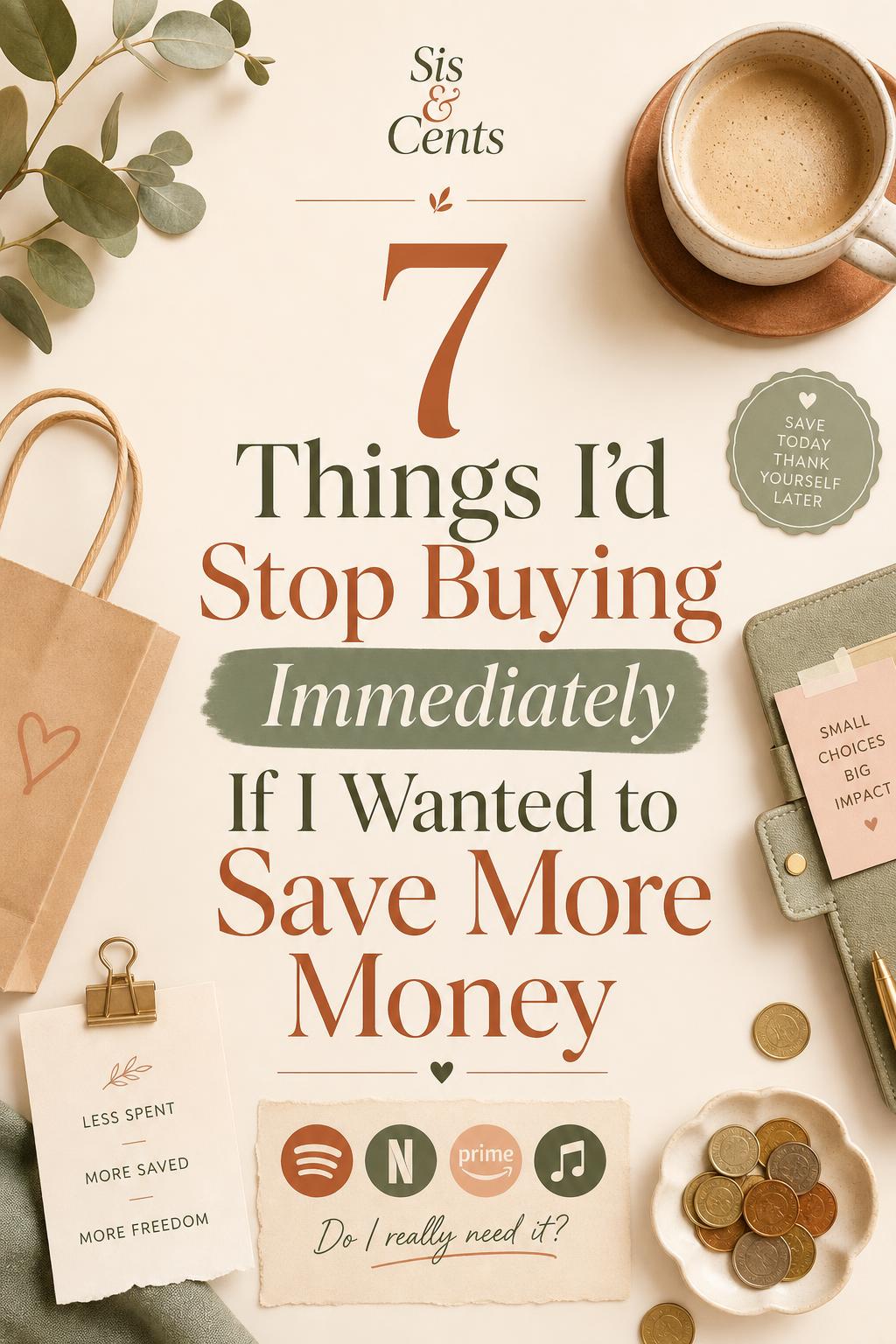
7 Things I'd Stop Buying Immediately If I Wanted to Save More Money
If I needed to free up cash fast, these are the first seven things I'd cut. No shame, no extreme frugality — just smart switches that actually stick.
August 14, 2026 · 8 min read
Filed under