How to Build Your First Emergency Fund (Even If You're Broke)
An emergency fund is the buffer between you and life going sideways. Here's how to start one from zero — without giving up everything you love.
August 12, 2026 · 8 min read · by your money big sis
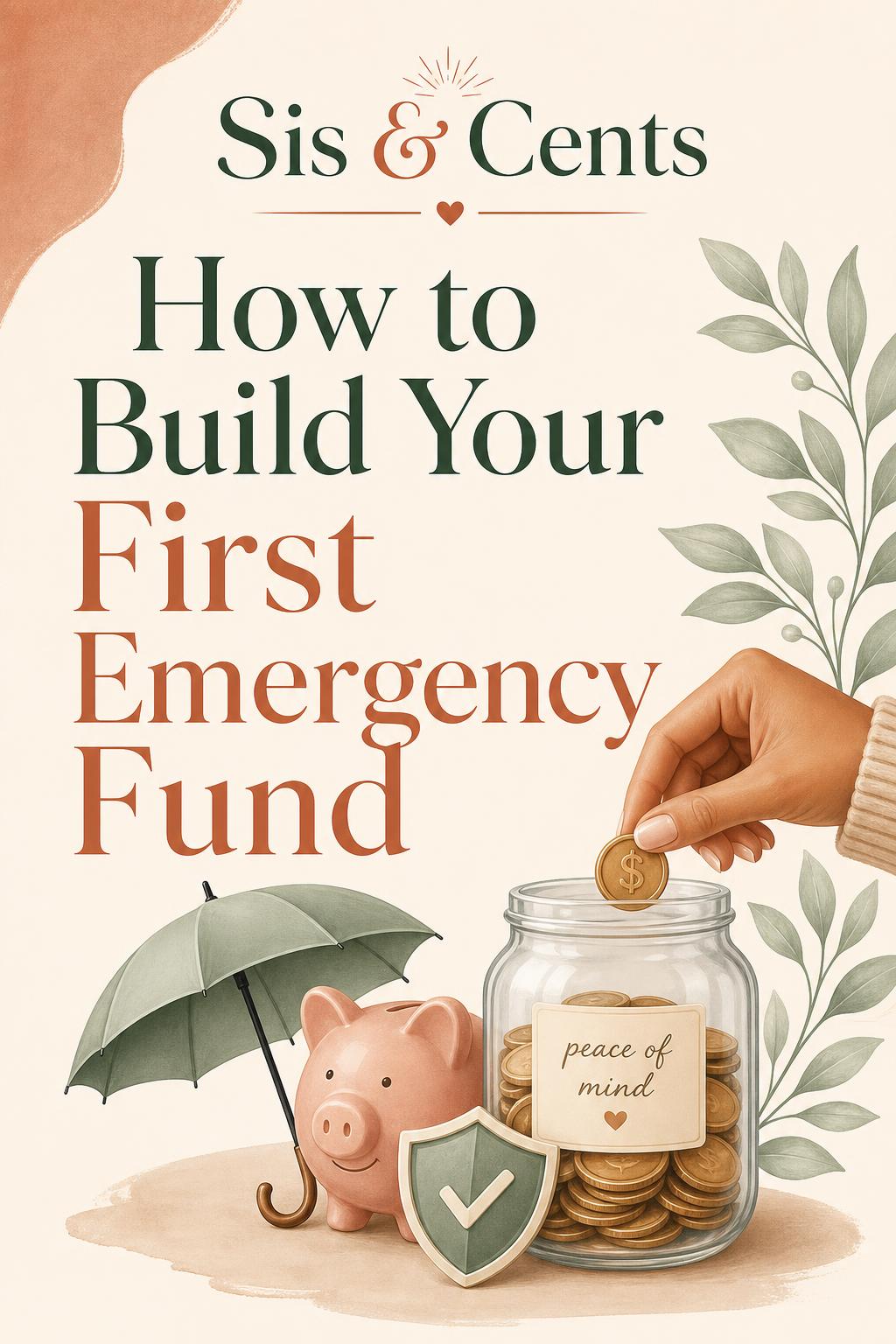
pin it for later ↑
The first time the car makes that sound — the expensive sound — your heart drops. When you don't have enough to cover the unreasonably high quote from the mechanic, a credit card balance that you are trying to pay off, and other bills, what is there to do except scream? The answer is build an emergency fund BEFORE any of these things happen.
An emergency fund isn't exciting. It's not a cute investment portfolio or a no-spend challenge you can post about. But it is the thing that keeps all your other money goals from getting blown up every time life happens.
Let's build yours. Starting today.
What an emergency fund actually is
It's cash. Set aside. For actual emergencies.
The full goal is usually 3–6 months of essential expenses. But if that number makes you want to close this tab, I get it. So we're not starting there. We're starting with $1,000.
Why $1,000? Because it's enough to cover most small disasters — a car repair, a vet visit, a last-minute flight, a broken phone — without reaching for a credit card. It's the buffer that stops the debt spiral before it starts.
Where to keep it
Not under your mattress. Not in your checking account where it blends in with your rent money. Not in the stock market where it could drop right when you need it.
Keep it in a high-yield savings account at a separate bank if you can. Ally, Marcus, Discover, and plenty of credit unions offer accounts around 4% APY. You want it accessible but not too accessible. Out of sight, out of swipe range.
This money is not for investing. It's not for vacations. It's insurance you give yourself.
How to find your first $1,000
You don't need a huge income. You need a short burst of focus. Here's how to get there faster than you think:
- Sell what you're not using. Clothes, furniture, old electronics, kitchen gadgets, that bike. Most people have $200–$500 sitting in their house in stuff they forgot about.
- Pause subscriptions for one month. Streaming, gym, meal kits, apps. Even $80 helps, and you can restart the ones you actually miss.
- Pick up one extra shift, one gig, or one freelance task. Rover, babysitting, Instacart, Upwork — one weekend can get you $100–$300 closer.
- Do a no-spend week. One week of no takeout, no Target runs, no online shopping. Put everything you would've spent straight into the fund.
- Automate a small transfer. Even $25 per paycheck adds up to $650 in a year. Set it and forget it.
You don't have to do all of these. Pick two or three and commit for 30 days.
What counts as an emergency
Be honest with yourself here, because this is where people derail.
Yes: car repairs, medical bills, job loss, emergency travel, urgent home repairs, replacing something you need for work.
No: a sale at your favorite store, a vacation you "deserve," Christmas gifts, a new phone because yours is scratched, concert tickets.
If you can plan for it, it's not an emergency. That's what sinking funds are for.
After $1,000, keep going
Once you hit $1,000, don't stop. Now you're building the real safety net.
A good target is one month of essential expenses, then three months, then six months. Essential expenses means rent, groceries, utilities, minimum debt payments, insurance, gas, and anything else you truly can't cut.
If your essential monthly expenses are $2,500, your goals look like this:
- $1,000 — starter fund
- $2,500 — one month covered
- $7,500 — three months covered
- $15,000 — six months covered
That's not overnight. That's the long game. And it's worth it.
When to pause other money goals
If you don't have at least a $1,000 starter emergency fund, pause aggressive debt payoff and investing until you do. I know that feels backwards, but here's why: without a buffer, every unexpected expense goes right back on the card or forces you to sell investments at the worst time.
Keep making minimum debt payments. Keep getting any 401(k) match because that's free money. But throw everything else at the emergency fund until you hit $1,000.
An emergency fund isn't a luxury. It's the foundation everything else sits on.
What to do this week
 Open a high-yield savings account if you don't have one
- List 5 things you could sell this month
- Set up an automatic $25 or $50 transfer per paycheck
- Decide what actually counts as an emergency for you
- Pick a target: $1,000 first, then one month of expenses
You don't need $10,000 tomorrow. You just need to start. One dollar at a time, one paycheck at a time, one decision at a time.
Future you — the one whose car makes the expensive sound at the worst possible moment — is going to be so grateful you did.
I'm rooting for you!
Keep reading, sis
 Budgeting
The Beginner's Guide to Budgeting (Without Losing Your Mind)
Okay sis, sit down — we're going to build the first budget that actually works for you. No spreadsheets, no shame spirals. Just a real plan.
June 14, 2026 · 8 min read
 Budgeting
The 30-Day No-Spend Challenge
The rules, the loopholes, the honest breakdown of how a 30-day no-spend challenge works— and a printable checklist to do your own no-spend month.
June 22, 2026 · 7 min read
 Budgeting
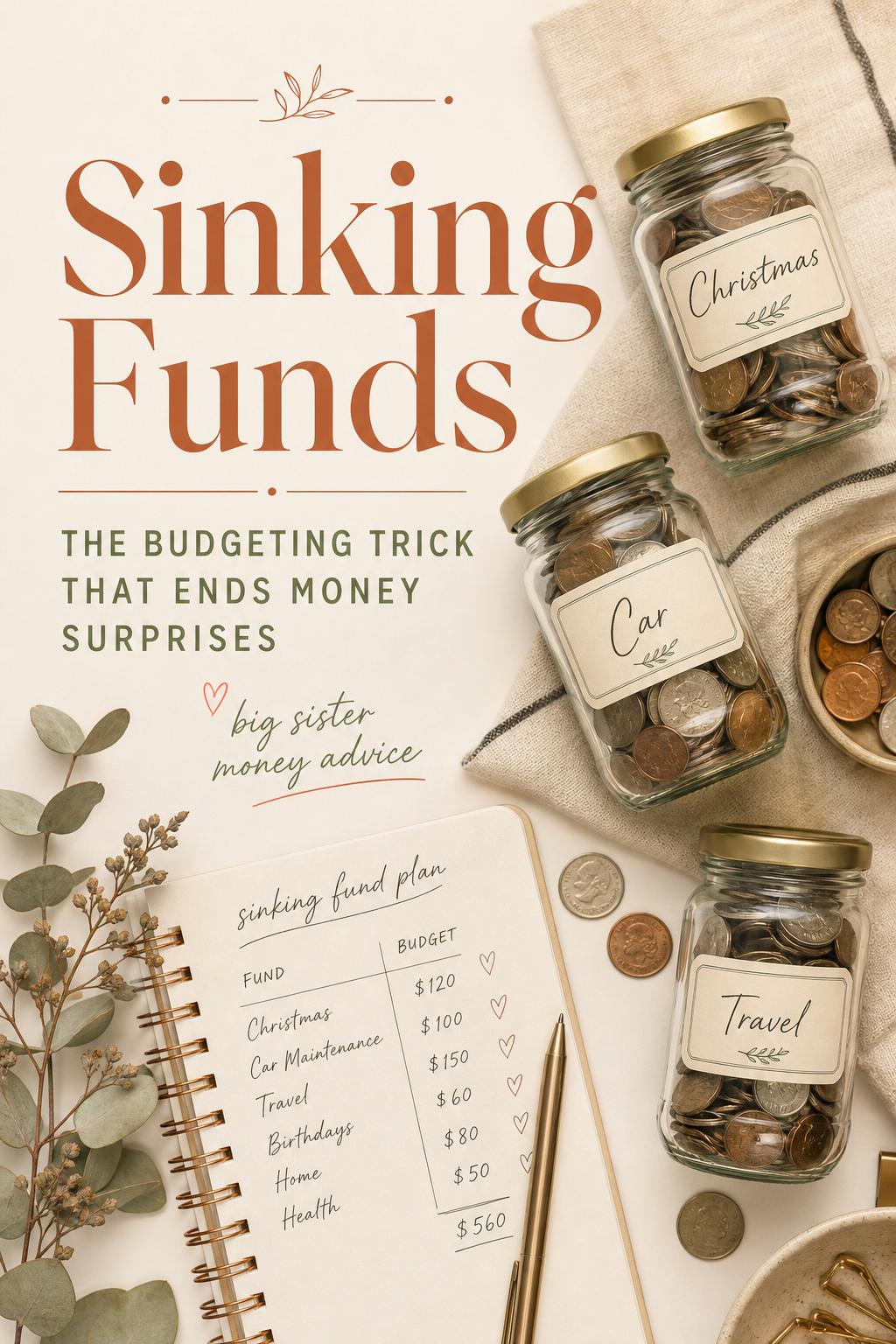
Sinking Funds: The Budgeting Trick That Ends Money Surprises
Christmas isn't an emergency. Neither is your car registration. Here's how to use sinking funds to make big expenses feel like nothing.
June 21, 2026 · 6 min read
 Budgeting
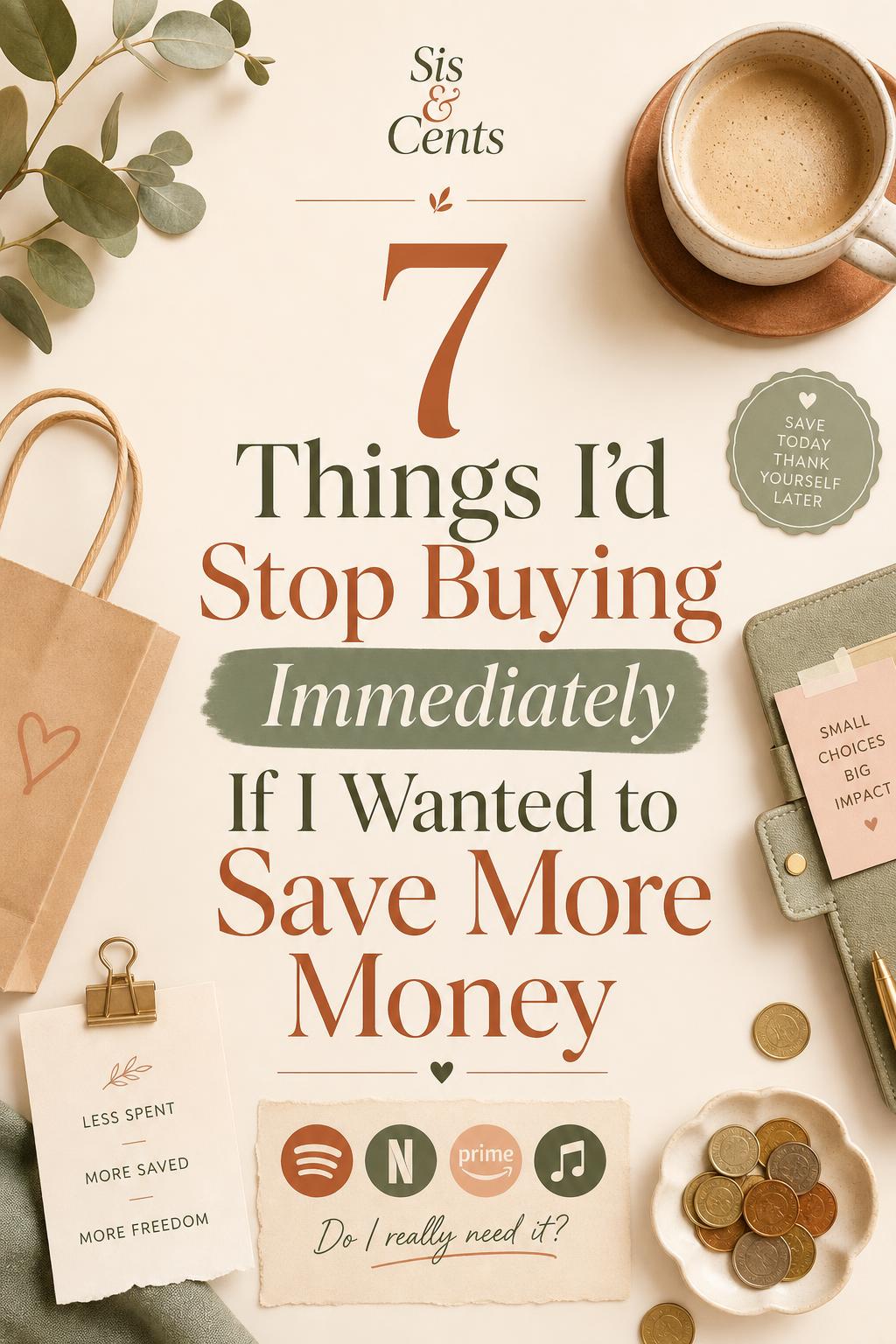
7 Things I'd Stop Buying Immediately If I Wanted to Save More Money
If I needed to free up cash fast, these are the first seven things I'd cut. No shame, no extreme frugality — just smart switches that actually stick.
August 14, 2026 · 8 min read
Filed under