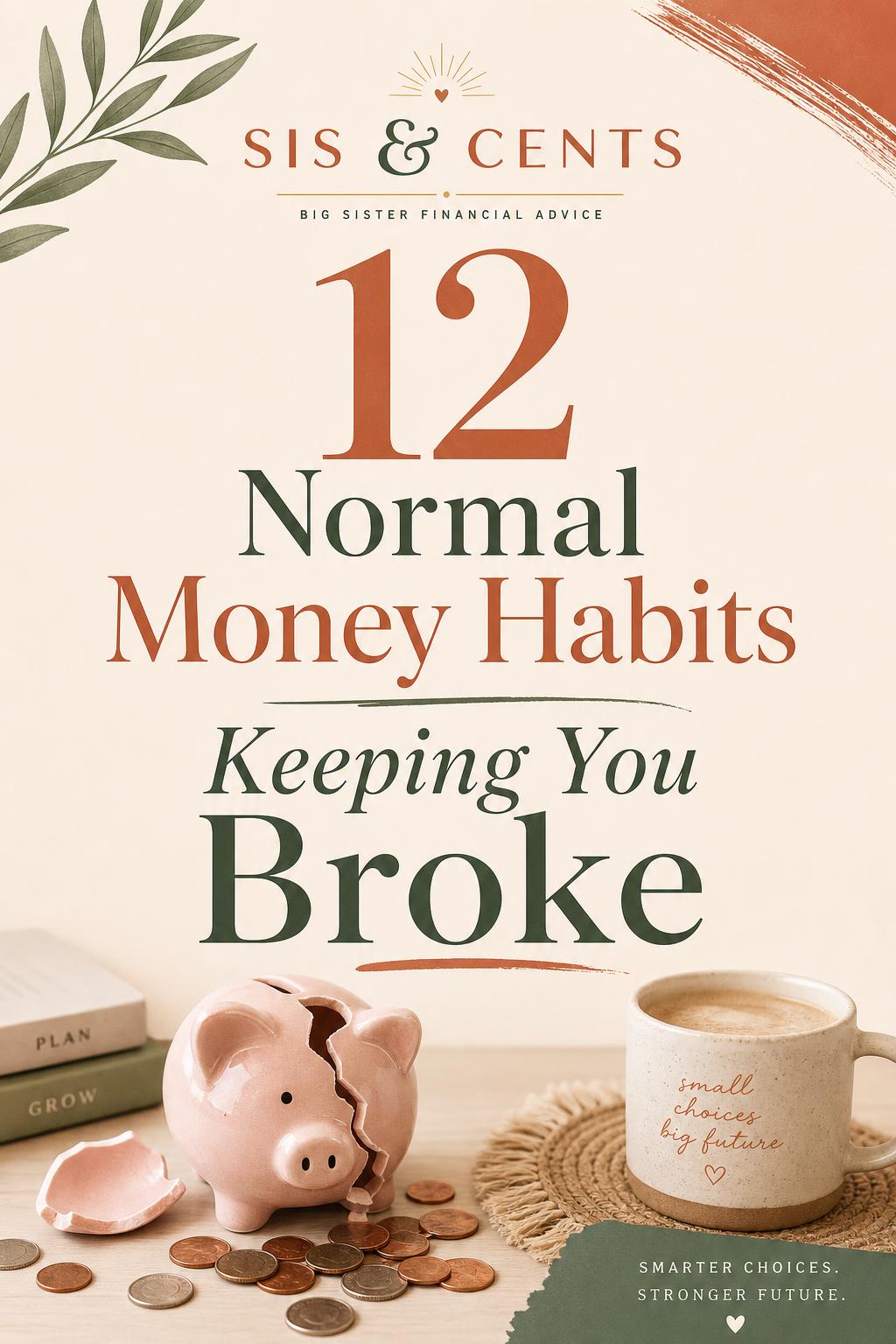
12 "Normal" Money Habits That Are Quietly Keeping You Broke
These everyday money habits feel totally normal — but they could be the reason your bank account never seems to grow. Here's what to watch for.
August 15, 2026 · 10 min read · by your money big sis
pin it for later ↑
Let's have a gentle reality check. Most people aren't broke because they bought one extravagant thing. They're broke because of small, repeated money habits that feel completely normal — until you add them up over a year.
The good news? Once you see the pattern, you can change it. And none of these changes require you to live on rice and beans or cancel all joy.
1. Treating your checking account like a spending meter
If you check your account, see money there, and assume it's available to spend, you're not alone. But that's a fast track to never building savings.
The fix: Move savings out of checking automatically. Pay yourself first, then live on what's left.
2. Waiting until "later" to start saving
"I'll save when I make more" is the most expensive sentence you can tell yourself. Lifestyle inflation usually eats the raise before savings ever sees it. I lived this way for years because I didn't think that I made enough money to save a "meaningful amount". Hindsight is 20/20, and as I look back at the last decade, I wish that I would have opened up my Roth IRA years earlier, because even if I had put away just a couple hundred dollars per year into the account, it could have helped my overall investment growth significantly just due to the amount of time that the money would have been invested.
The fix: Start with 1% of your income. Increase it by 1% every few months. Future you will be shocked how fast it grows.
3. Buying "little treats" every day
A $7 coffee here, a $12 lunch there, a $5 app purchase because why not. These feel like nothing — but $20 a day is roughly $600 a month.
The fix: Budget for treats on purpose. There's nothing wrong with enjoying your money; just don't let enjoyment happen on autopilot.
4. Ignoring subscriptions because they're "only $10"
Ten subscriptions at $10–$15 each is $100–$150 a month. That's a car payment or a solid emergency fund contribution.
The fix: Audit subscriptions quarterly. Cancel anything you haven't used in 30 days.
5. Paying only the minimum on credit cards
Minimum payments are designed to keep you in debt as long as possible. A $1,000 balance at 25% APR can take years to clear if you're only paying the minimum.
The fix: Pay even $25 more than the minimum. Better yet, stop adding new charges until the balance is gone.
6. Buying new instead of checking what you already own
How many times have you bought something, only to realize later you already had it? New phone case, black tank top, kitchen gadget, even spices to use in recipes that you already have — the duplicates add up.
The fix: Before buying anything non-essential, do a quick inventory. Check your closet, cabinets, and digital library first.
7. Letting sales convince you to "save money"
A 40% off sale isn't saving money if you weren't planning to buy it. It's spending 60% on something you didn't need.
The fix: Use a 48-hour rule for non-essential purchases. If you still want it and can afford it after two days, go ahead.
8. Not having a plan for windfalls
Tax refunds, bonuses, birthday money — they tend to disappear when there's no plan. These are windfalls: unexpected or unpredictable instances of profit or good luck. Without planning, one celebratory dinner turns into a shopping spree, and just like that, the money you received from a windfall is gone.
The fix: Decide in advance what percentage of windfalls goes to fun, debt, and savings. Even a 50/25/25 split is better than 100% gone.
9. Keeping all your money in one account
When everything lives in checking, it's hard to tell what money is for bills, what is for fun, and what is for savings. It all blends together.
The fix: Use separate savings buckets or accounts for emergency funds, sinking funds, and goals. Researching banks that allow for this type of partitioning of savings accounts can be super helpful. Once the money is out of sight in a separate savings bucket that you know is dedicated to your savings, it is out of spending reach.
10. Comparing your spending to other people's lifestyles
Social media makes it look like everyone can afford brunch, trips, and new decor. What you don't see is the debt, the parental help, or the second job behind it. Also, it's possible that many people who depict lavish lifestyles online are being sponsored by certain brands in order to drive sales.
The fix: Spend based on your own goals and income, not someone else's highlight reel.
11. Avoiding your bank statements
Not looking at your money doesn't make problems disappear. It just makes them surprise you later.
The fix: Pick one day a week to review your transactions. Five minutes of awareness can change everything.
12. Thinking you have to be "good at money" to start
Perfectionism keeps a lot of people stuck. They think they need a perfect budget, a perfect plan, and perfect discipline before they can improve.
The fix: Start disorganized. Start small. Start today. Progress beats perfection every single time.
Which habit is your biggest one?
You don't need to fix all twelve. Pick the one that made you wince the most and start there. Small shifts in normal habits create abnormal results over time.
I'm rooting for you!
Disclosure: This article is for educational, informational, and entertainment purposes only. It is not financial advice. I am not a financial professional, and you should always independently verify important information and consult a qualified financial professional when necessary. Any dollar amounts presented in this article are estimates. Be sure to do your own financial research.
Keep reading, sis
 Budgeting
The Beginner's Guide to Budgeting (Without Losing Your Mind)
Okay sis, sit down — we're going to build the first budget that actually works for you. No spreadsheets, no shame spirals. Just a real plan.
June 14, 2026 · 8 min read
 Budgeting
The 30-Day No-Spend Challenge
The rules, the loopholes, the honest breakdown of how a 30-day no-spend challenge works— and a printable checklist to do your own no-spend month.
June 22, 2026 · 7 min read
 Budgeting
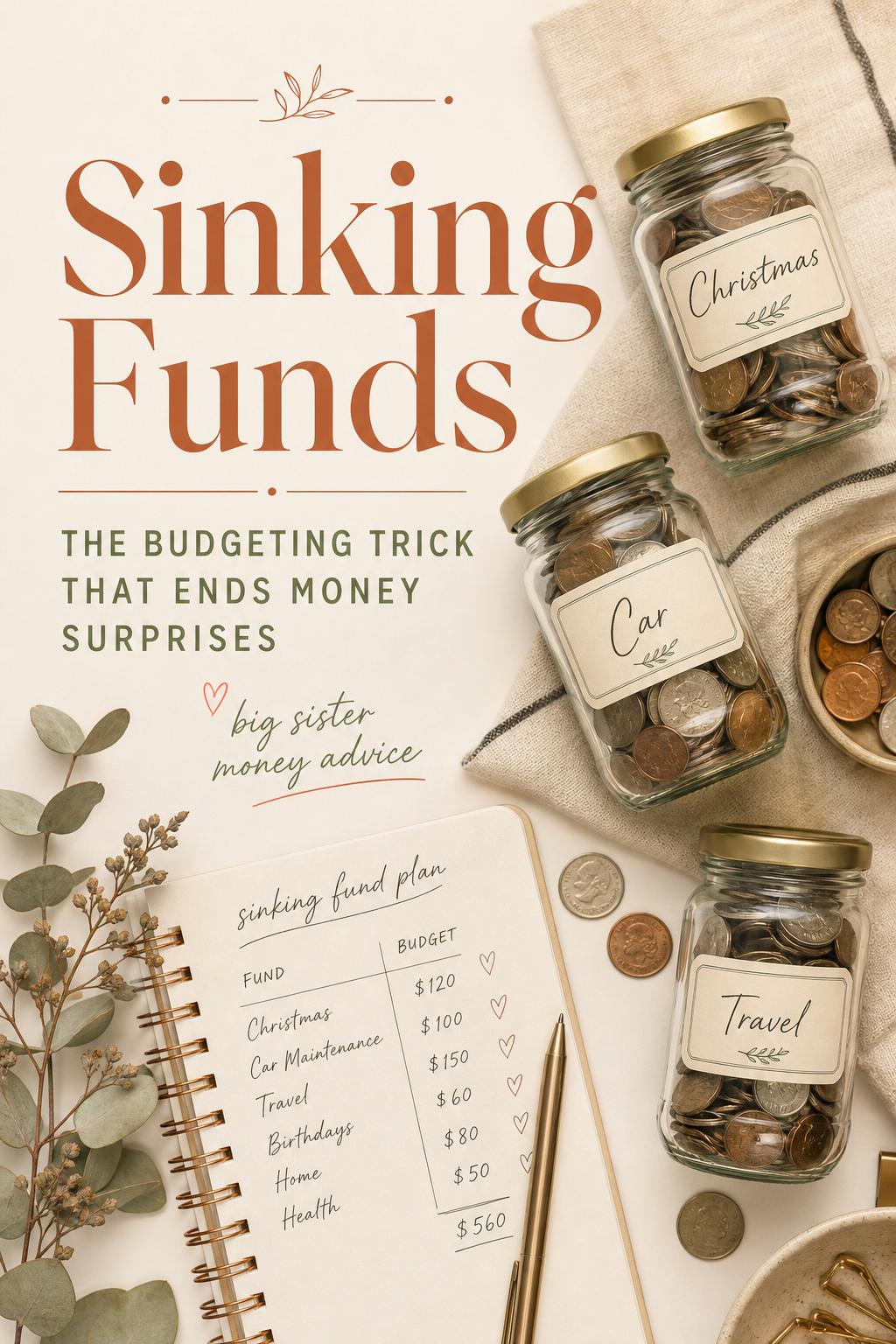
Sinking Funds: The Budgeting Trick That Ends Money Surprises
Christmas isn't an emergency. Neither is your car registration. Here's how to use sinking funds to make big expenses feel like nothing.
June 21, 2026 · 6 min read
 Budgeting
How to Build Your First Emergency Fund (Even If You're Broke)
An emergency fund is the buffer between you and life going sideways. Here's how to start one from zero — without giving up everything you love.
August 12, 2026 · 8 min read
Filed under