I Wish Someone Had Told Me These 15 Money Rules in My 20s
The money lessons nobody taught us in school — from emergency funds and Roth IRAs to avoiding lifestyle creep and actually sticking to a budget.
August 14, 2026 · 13 min read · by your money big sis
pin it for later ↑
If I could sit my 22-year-old self down with a coffee and a slightly exasperated expression, I would. I made so many money mistakes in my 20s — not because I was reckless, but because nobody told me the rules.
Not the boring ones from a textbook. The real ones. The ones that determine whether you hit 30 feeling steady or stressed.
So here's the list I wish someone had handed me. Read it, save it, send it to your best friend.
1. Your income is not your spending limit
Just because the money hits your account doesn't mean it has a job yet. If you spend up to your income by default, you'll never feel like you have enough — even when you make more.
The rule: Decide where every dollar goes before the month starts. Give yourself permission to spend on purpose, not on autopilot.
2. Build a $1,000 emergency fund before anything fancy
Before you worry about investing, debt avalanche strategies, or crypto, get $1,000 in a savings account you don't touch. This is your "life happens" fund. Flat tire. Urgent care visit. Last-minute flight. It keeps small emergencies from becoming credit card debt.
3. Start your Roth IRA as early as possible
Time is the most powerful money tool you have in your 20s. A Roth IRA lets your money grow tax-free, and the earlier you start, the more compound interest works in your favor.
Even $50 a month in your early 20s can turn into something meaningful by your 50s. You don't need to max it out right away. You just need to start.
4. Lifestyle creep is the silent killer
The second you get a raise, your brain starts picturing a nicer apartment, a better car, more takeout. This is called lifestyle creep, and it eats raises before savings ever sees them.
The rule: When your income goes up, let your savings rate go up first. Then upgrade your life slowly and intentionally.
5. Credit cards are a tool, not free money
Credit cards can build your credit score, earn rewards, and protect purchases. But if you're carrying a balance, the interest wipes out every perk.
The rule: Use credit cards like debit cards. If you can't pay it off in full this month, don't swipe.
6. Track your net worth, not just your bank balance
Your bank balance is a mood. Your net worth is the truth. Net worth = what you own minus what you owe. It includes savings, investments, retirement accounts, and debt.
Checking it once a month keeps you honest about whether you're actually moving forward.
7. Negotiate your salary, especially when changing jobs
The biggest raises usually come from switching jobs or asking for more when you get an offer. Staying quiet because you're grateful for the opportunity can cost you tens of thousands over a career.
The rule: Always ask. The worst they can say is no, and often they say yes or meet you partway.
8. Sinking funds will save your sanity
Christmas. Car registration. Birthdays. Annual subscriptions. These aren't emergencies — they're predictable expenses you forgot to plan for.
The rule: Create sinking funds for anything that happens regularly but not monthly. Divide the total by 12 and stash that much away each month.
9. Don't buy a car you can't pay off in three years
A car is a tool to get you places, not a status symbol that should own your paycheck. If you need a six or seven-year loan to afford the payment, the car is too expensive for your current life.
The rule: Keep total car costs — payment, insurance, gas, maintenance — under 15% of your monthly take-home pay.
10. Your 20s are for investing in your income potential
Sometimes the best financial move isn't saving more — it's earning more. Take the class. Learn the skill. Build the portfolio. Ask for the promotion.
Your earning potential in your 20s compounds just like investments do. The more you can make, the more you can save, give, and enjoy.
11. Comparison is the thief of your budget
Social media will make you feel like everyone is traveling, buying houses, and living their best life. What you don't see is the debt, the parental help, the brand sponsorships, or the second jobs.
The rule: Run your own race. Spend based on your goals and your income, not someone else's highlight reel.
12. Automate your savings before you can spend it
Willpower is unreliable. Automation is not. If you wait until the end of the month to save whatever is left, there will rarely be anything left.
The rule: Set up automatic transfers to savings and investment accounts for payday. Pay your future self first.
13. Debt isn't a personality trait
So many people carry shame around debt like it defines them. It doesn't. Debt is a math problem with a deadline. It doesn't mean you're bad with money — it means you have a situation to work through.
The rule: Pick a payoff method, make a plan, and stop talking to yourself like the debt is permanent.
14. Say yes to experiences — but budget for them
Your 20s are for memories too. The goal isn't to hoard every dollar and never live. The goal is to enjoy your money on purpose.
The rule: Create a "fun fund" in your budget. When the money is allocated, you can say yes without guilt.
15. Done is better than perfect with money
You don't need the perfect budget, the perfect investment strategy, or the perfect five-year plan. You need to start. Most people stay stuck because they're waiting until they feel ready.
The rule: Start messy. Start small. Start today. Progress beats perfection every single time.
Which rule do you wish you'd learned sooner?
Pick one from this list and act on it this week. Open the savings account. Set up the auto-transfer. Ask about the raise. Just start.
Your future self is already thanking you.
Disclosure: This article is for educational, informational, and entertainment purposes only. It is not financial advice. I am not a financial professional, and you should always independently verify important information and consult a qualified financial professional when necessary. Any dollar amounts presented in this article are estimates. Be sure to do your own financial research.
Keep reading, sis
 Budgeting
The Beginner's Guide to Budgeting (Without Losing Your Mind)
Okay sis, sit down — we're going to build the first budget that actually works for you. No spreadsheets, no shame spirals. Just a real plan.
June 14, 2026 · 8 min read
 Budgeting
The 30-Day No-Spend Challenge
The rules, the loopholes, the honest breakdown of how a 30-day no-spend challenge works— and a printable checklist to do your own no-spend month.
June 22, 2026 · 7 min read
 Budgeting
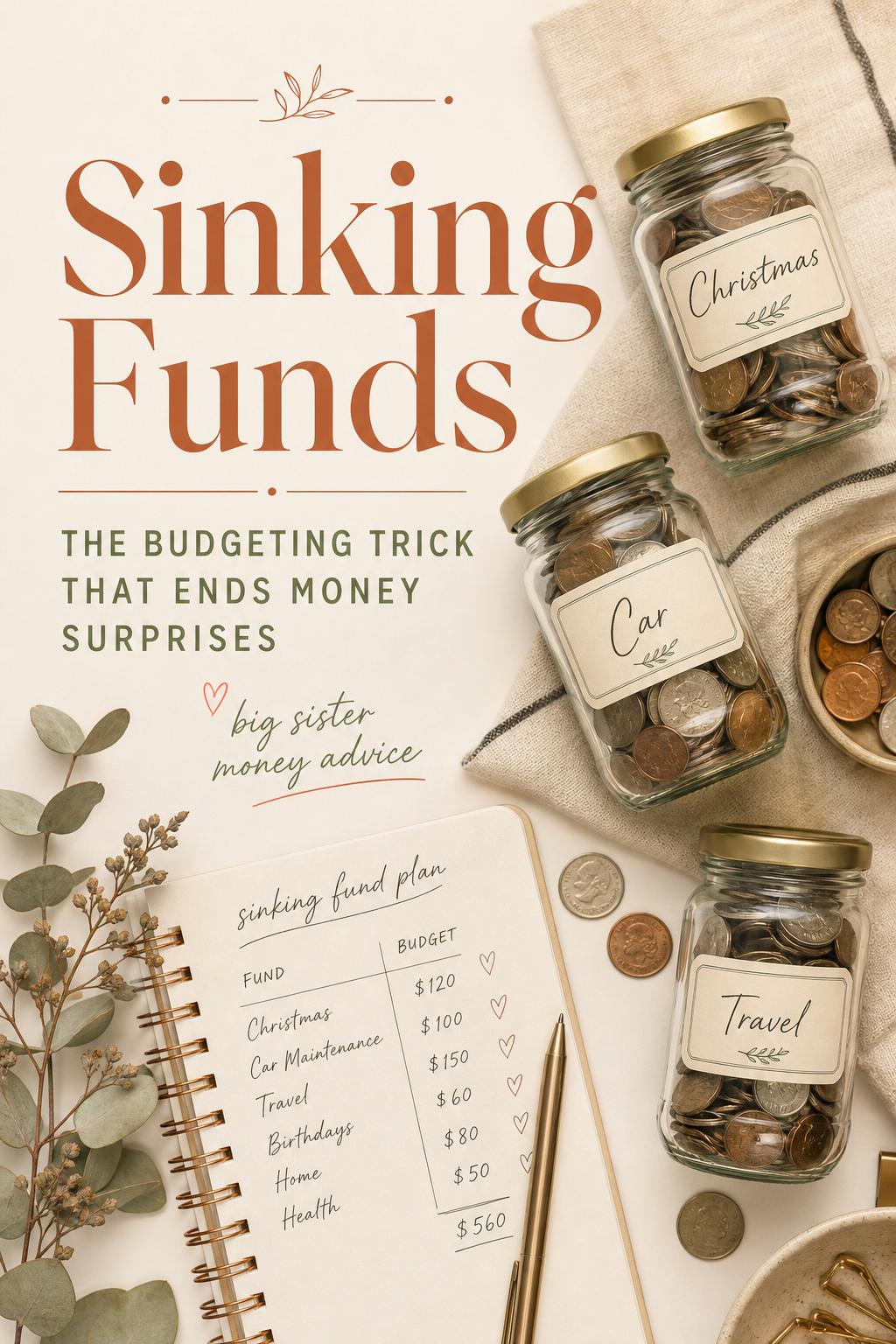
Sinking Funds: The Budgeting Trick That Ends Money Surprises
Christmas isn't an emergency. Neither is your car registration. Here's how to use sinking funds to make big expenses feel like nothing.
June 21, 2026 · 6 min read
 Budgeting
How to Build Your First Emergency Fund (Even If You're Broke)
An emergency fund is the buffer between you and life going sideways. Here's how to start one from zero — without giving up everything you love.
August 12, 2026 · 8 min read
Filed under