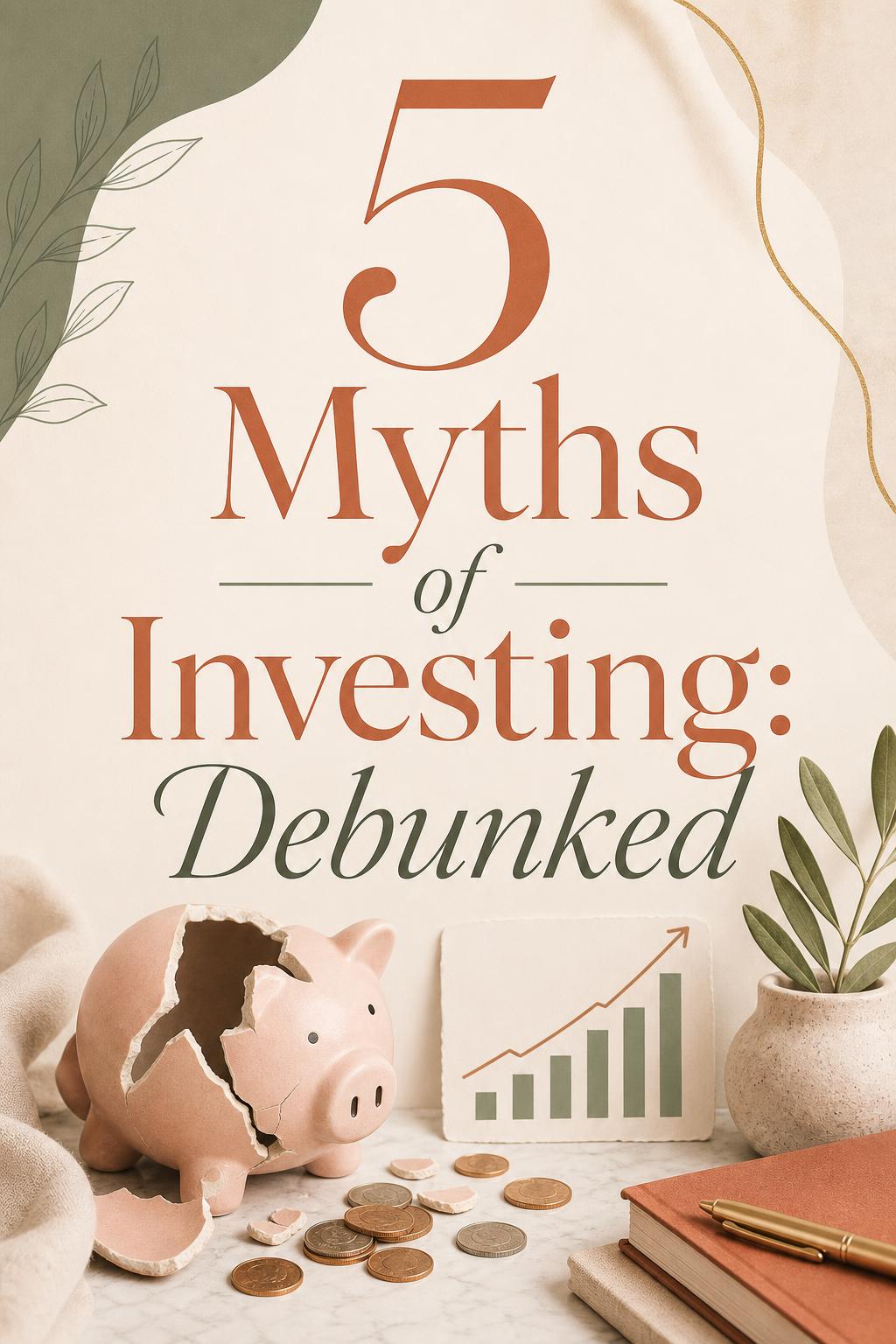
The 5 Myths of Investing: Debunked
Think investing is only for rich people, stock pickers, or math aficionados? Let's bust the five biggest myths keeping you from building wealth.
August 13, 2026 · 8 min read · by your money big sis
pin it for later ↑
Let's be honest — investing has a reputation problem. People think it's complicated, risky, or something you need a trust fund to start. I thought the same thing for years. I also used to think I needed to be a stock market genius or have thousands of dollars before I could even open an account.
Spoiler: none of that is true.
Here are the five biggest investing myths I hear over and over — and the truth behind each one.
Myth #1: You need a lot of money to start investing
This one stops more beginners than anything else. It feels like investing is a club with a $5,000 cover charge.
The truth: You can start with pocket change. Many brokerage accounts and Roth IRAs let you open an account with $0 and fund it with whatever you have. Some index funds have $1 minimums. Fractional shares let you buy a slice of a company for $5.
You don't need to be rich to start investing. You just need to start. Even $25 a month adds up, especially if you start young. Time is the real money-maker here, not the starting amount.
The best time to start investing was ten years ago. The second best time is today — even if "today" comes with a $20 bill.
Myth #2: Investing is basically gambling
I get why people think this. The stock market goes up and down every day. News channels scream about crashes. Your uncle lost money on a "hot tip" in 2008. It can feel like a casino.
The truth: Gambling is putting money on random outcomes and hoping you win. Investing is buying ownership in real companies and letting those companies grow over time.
Yes, the market fluctuates. But over long periods, the overall stock market has historically trended upward. The key difference is time horizon. A day trader is gambling. Someone who buys a low-cost index fund and holds it for twenty years is building wealth.
The house doesn't always win in investing — because if you stay diversified and patient, you're basically the house.
Myth #3: You have to pick individual stocks to make real money
TV shows and finance bros make stock picking look like the only way to get rich. Study charts, read earnings reports, buy the next Apple before anyone else.
The truth: Most people — including professional fund managers — do not consistently beat the market by picking stocks. Studies show that the majority of actively managed funds underperform simple index funds over time.
For most beginners, the smartest move isn't picking winners. It's buying the whole market through an index fund or ETF. You get instant diversification, low fees, and you don't have to become a Wall Street analyst.
You don't need to find the next big stock. You just need to own a little bit of everything and let time do its thing.
Myth #4: You need to time the market perfectly
"Should I wait for a crash?" "Is now a bad time to invest?" "What if I buy right before it drops?"
These questions are so common because they feel responsible. Nobody wants to look back and realize they bought at the top.
The truth: Timing the market is nearly impossible, even for professionals. What works far better is time in the market. Consistently investing a set amount — called dollar-cost averaging — smooths out the highs and lows. Some months you buy high, some months you buy low, and over time it averages out in your favor.
The biggest risk for most beginners isn't buying at the wrong time. It's waiting forever and never buying at all.
The key is not perfect timing. The key is consistent contributions and the patience to leave them alone.
Myth #5: Investing is too complicated for normal people
Between 401(k)s, IRAs, ETFs, index funds, Roth vs. traditional, capital gains taxes, and dividend yields, investing can sound like a foreign language.
The truth: It only feels complicated because the financial industry profits when you feel confused enough to hand your money over to someone else. The basics are actually simple:
- Open a retirement account (401(k) match first, then Roth IRA)
- Pick a low-cost index fund or target-date fund
- Set up automatic contributions
- Leave it alone for a decade or two
That's it. You can learn the fancy stuff later if you want. But you don't need to understand every term to start building wealth.
Which myth was holding you back?
If you've been telling yourself you need more money, more knowledge, or a better "entry point" before you invest, I want you to know: that was the myth talking.
Investing is not a personality trait. It's not a talent. It's a habit. One small decision today — opening an account, contributing $25, buying your first index fund — can completely change your financial future.
Pick one thing to do this week:
- Open a Roth IRA
- Increase your 401(k) contribution by 1%
- Buy your first index fund
- Set up an automatic monthly investment
You don't need to be perfect. You just need to start.
I'm rooting for you!
Disclosure: This article is for educational, informational, and entertainment purposes only. It is not financial advice. I am not a financial professional, and you should always independently verify important information and consult a qualified financial professional when necessary. Any dollar amounts presented in this article are estimates. Be sure to do your own financial research.
Keep reading, sis
 Investing
Investing 101: How to Start Investing With Zero Experience
Investing sounds like something rich people do. It's actually something *future*-rich people do. Here's how to open your first account and pick your first fund.
May 18, 2026 · 9 min read
 Investing
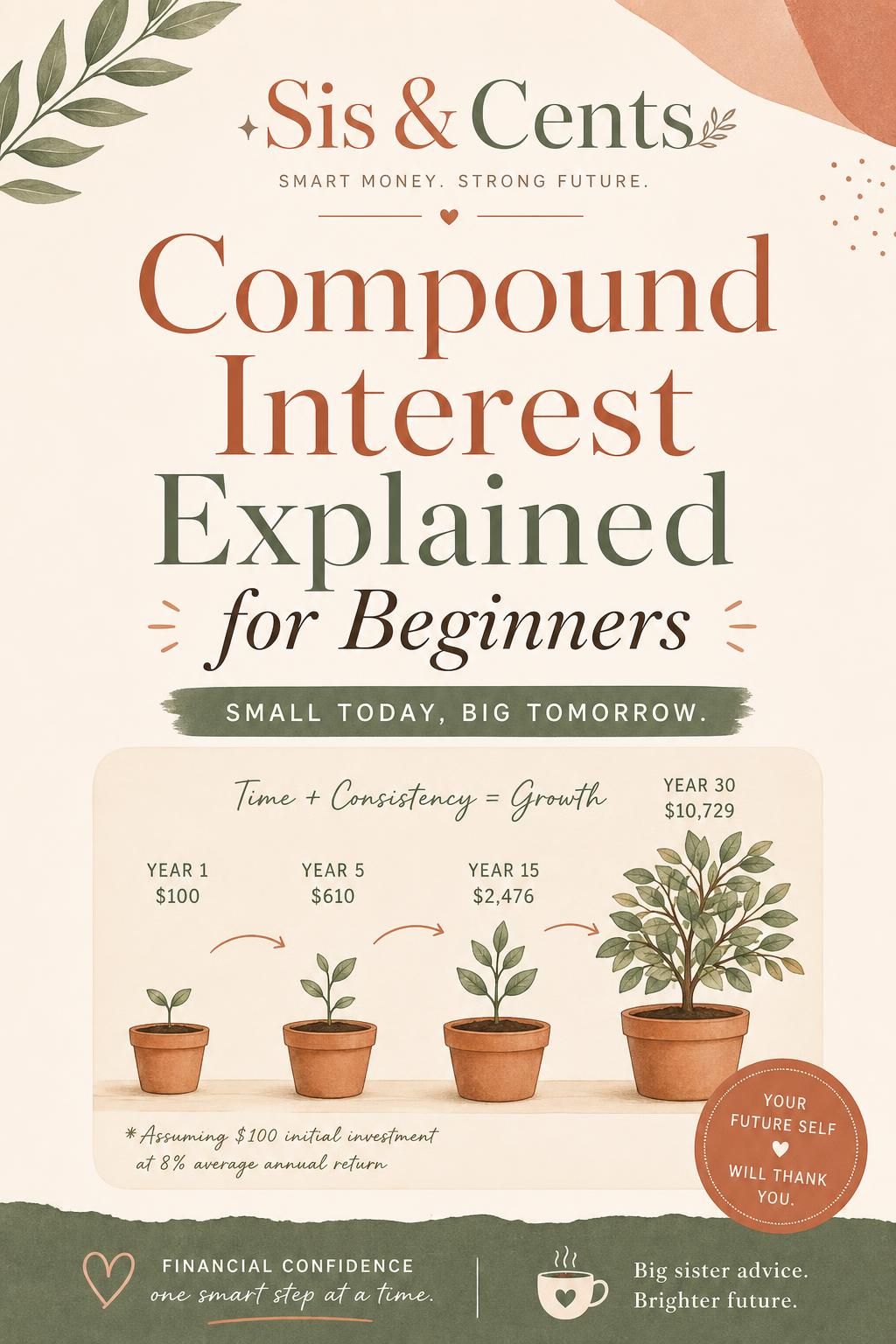
Compound Interest for Beginners: How to Make Money While You Sleep
Compound interest is the closest thing to magic in personal finance. Here's how it works, why starting early wins, and where to put your money so it grows itself.
August 12, 2026 · 8 min read
 Investing
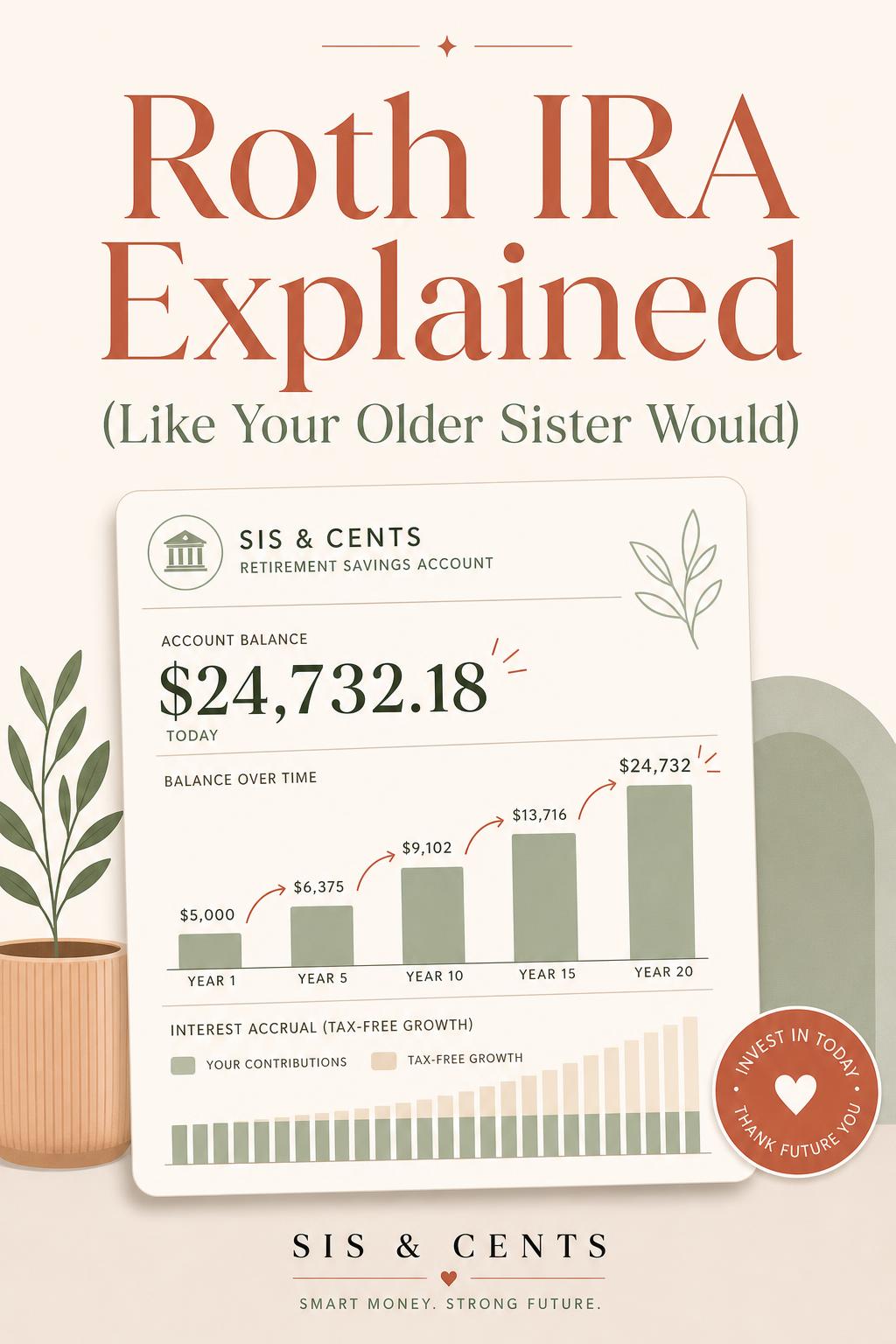
Roth IRA Explained (Like Your Older Sister Would)
It's not scary, it's not just for rich people, and it's honestly one of the best financial decisions you'll make this decade. Let's break it down.
March 28, 2026 · 7 min read
 Budgeting
The Beginner's Guide to Budgeting (Without Losing Your Mind)
Okay sis, sit down — we're going to build the first budget that actually works for you. No spreadsheets, no shame spirals. Just a real plan.
June 14, 2026 · 8 min read
Filed under